• Skip to primary navigation
  • Skip to main content

Cogent QC: Award-Winning Loan Quality Control & Compliance Software

Award-Winning Mortgage Quality Control and Compliance Software

Generic selectors
Exact matches only
Search in title
Search in content
Post Type Selectors

415-495-3660  |  info@cogentqc.com  |  Request Demo

  • Home
  • Company
    • About
    • Why Cogent?
    • Client Success Stories
    • Client Services and Support
      • Professional Services
      • Technical Support
  • Platform
    • Products
      • ProductionQC – Loan Production Quality Control Software
      • ServicingQC – Loan Servicing Quality Control Software
    • Solutions
    • Awards
    • GSE’s, Regulators & Rating Agencies
  • Resources
    • Statistical Calculator
    • Blog
    • White Papers & Articles

CFPB Exam Manual versus War and Peace

August 22, 2013 By James Robinson

In a recent Housing Wire article, Megan Hopkins reported on the CFPB’s update of its exam procedures, and at the end of the article is a link to the new update for RESPA.  Amazingly, the update for RESPA alone is an 82 page document!

war_and_peace_0Wow, I thought, this is a lot for a Compliance department to read and incorporate into its audit processes – and it’s only for RESPA.  I wonder how lengthy the entire manual is?

Well, the October 2012 Version 2 of the CFPB Supervision and Examination Manual is a whopping 924 pages!

And that doesn’t include the subsequent updates for Debt Collection (29 pages), Education Loans (27 pages), ECOA (48 pages), TILA (213 pages),  more ECOA (18 pages) and RESPA (82 pages).

So far, a total of 1,341 pages!

While it’s not quite as long as War and Peace (1,440 pages) yet, it probably will be after a couple more updates.

Happy reading, compliance professionals!
 

Filed Under: Uncategorized

Meaningful Metrics and Process Improvement

May 29, 2013 By Kaan Etem

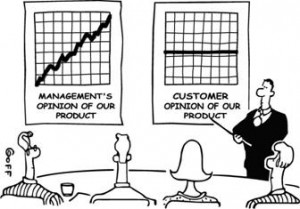
“The availability of meaningful and actual information is a true weakness in QC today.”  So says Jeremy Burcham, AVP of Loan Review Solutions at Interthinx in a recent video in National Mortgage News’ Ask the Experts series.  We agree with that.  We also agree when he states that many QC operations – including outsourced QC firms – are not focused on obtaining performance data that will help them improve their processes.  Instead, they are often focused on individual issues like fixing a particular loan, or internal issues like what is politically correct within their organizations, or a meaningless metric (e.g., total number of errors found, regardless of context), or even just completing their assigned reviews by the deadline.

measurement-cartoonGiven that the purpose of quality control is to improve processes, there are few activities more important than thinking through the appropriate metrics to use to track progress.  If you don’t know where you’re going, as the adage goes, how will you know when you get there?  Cogent has some ideas about how to approach this and we invite you to browse the white papers on our website for more information.  And there are others with deep expertise in this area.  For instance, Avinash Kaushik, one of the most respected authorities on Web Analytics, has these guidelines on the attributes of great metrics.

For now, though, a tip of the hat to Interthinx for helping raise awareness of the need for good, meaningful and actionable data.


Filed Under: Business Process, Mortgage Quality Control, Risk Management

Cogent Releases Version 4.0

May 15, 2013 By Kaan Etem

Version 4.0

We are pleased to announce that Cogent QC Systems Version 4.0 has been released.  Here is the news release and here is the Version 4.0 Feature List, showing all features introduced since the Version 3.0 release.

We’ll be announcing dates for introductory webinars on some of the major new functionality.  And as usual, we record all webinars and make them available to clients who cannot make the live sessions.

If you’re wondering when you’ll get access to these features, contact us at support@cogentqc.com.

Happy QC’ing!

Filed Under: Uncategorized

Microsoft Excel: Powerful, Easy to Use, and a Bit Dangerous

April 16, 2013 By Kaan Etem

https://pubpages.unh.edu/~bwn24/excelFile.png

Microsoft Excel is such a powerful, intuitive and familiar software tool that people think of it first whenever they need to work with relatively complex sets of numbers.  Combined with Microsoft Word, Excel is frequently the quality control and/or reporting “system” of choice for new or small lenders, or for those who are forced to work with a no-cost solution.  But Excel is not a database application, does not accommodate workflows very easily, and is wide open to human error.  Among other things, manual cut-and-paste, manual data entry and formula errors can produce wildly incorrect results.

A pair of recent articles highlight the kinds of errors that are common in the worlds of business and finance, and that can lead to disastrous decisions.  “The Importance of Excel” talks about the pernicious consequences of even small errors, concluding that “[w]hile all software breaks occasionally, Excel spreadsheets break all the time. But they don’t tell you when they break: they just give you the wrong number.”  The second article talks about the dangers of false assumptions, selective data usage, and simple coding error.  Both are worthwhile reads, if only to appreciate what actually goes into the models that business and political leaders seize on to validate their points of view.

Any tool is only as good as the fallible human being using it.  That’s why savvy managers never take spreadsheets at face value, and why professionals insist on using the right tools for the right job.

Filed Under: Uncategorized Tagged With: Analytics, Excel, Tools

Mustaches in Movember

November 9, 2011 By Cogent QC

Mustaches are top of mind in Movember for those hirsute men who wish to do some good with their facial hair.  But there are those who go beyond just letting it grow once a year; these are men who have turned the mustache into a cause.

American Mustache Institute

The American Mustache Institute and a noted tax professor have lobbied the IRS and Congress for a tax incentive for Mustached Americans called The STACHE Act Proposal (Stimulus To Allow Critical Hair Expenses).  The rationale?  “We’ve learned from studies that mustached Americans are earning about 4.3% more on average than the clean-shaven American,” says that noted tax professor, Dr. John Yeutter.

He goes on to say: “Given the clear link between the growing and maintenance of mustaches and incremental income, it appears clear that mustache maintenance costs qualify for and should be considered as a deductible expense related to the production of income under Internal Revenue Code Section 212.”  Specifically, the STACHE Act offers incentives for people of Mustached American heritage in the form of a $250 deduction for expenditures for mustache grooming supplies in the determination of Adjusted Gross Income.

Brilliant!  To date, our favorite example to illustrate the fallacy of equating correlation with causation has been that of the almost perfect synchronicity between drowning deaths in the US and the consumption of ice cream.  While the two march in lockstep, ice cream consumption does not cause drowning nor vice versa.  But the American Mustache Institute may have sprouted an even better example.  Clearly, the task is now to advise all ambitious men of this newfound competitive advantage.  But what of the women?

Posted by Kaan Etem


Filed Under: Uncategorized

  • « Go to Previous Page
  • Go to page 1
  • Interim pages omitted …
  • Go to page 7
  • Go to page 8
  • Go to page 9
  • Go to page 10
  • Go to page 11
  • Interim pages omitted …
  • Go to page 16
  • Go to Next Page »
  • Home
  • Products
  • Solutions
  • Clients
  • Blog
  • Tools & Resources
  • Contact Us
  • Terms of Use and Privacy Policy

Copyright © 2026 · Website Design by BizTraffic